

The new Asset Strength Reversion (ASR) Expert Advisor went live one month ago, introducing key features designed to significantly refine our trade qualification process. These enhancements allow for more precise identification of genuine mean reversion opportunities and integrate sophisticated filters to better mitigate risks associated with false signals or prolonged market trends. This means a more robust and reliable approach to entering trades.
ASR Expert Advisor – first month
We only have a little data for the ASR Expert Advisor, as the mentioned updates are still rather novel – yet despite limited data, we do have some data, a sample size of 29 trades, across multiple asset classes and timeframes (1 and 4-hour). What do we have to show after the first month of using the ASR Expert Advisor:

Mean Reversion
A core principle of any mean reversion Expert Advisor or mean reversion algorithm in general, is the profitability when asset prices exhibit expected behaviour – specifically, when they revert to their mean. This foundational concept relies on the statistical tendency of prices to gravitate back towards an average over time, offering predictable opportunities for strategic entries and exits. However, as we all know, the market is inherently unpredictable; it is a dynamic and complex system influenced by countless variables, often reacting illogically or irrationally in the short term.
Therefore, we must acknowledge that asset prices may not always do what they “normally” do, and deviations from the mean can be prolonged, significant, and defy conventional statistical expectations (there goes the model), presenting a crucial challenge for mean reversion strategies.
The Unexpected
Unforeseen events are a constant possibility. Trump opens his mouth, economic indicators surpass or fall short of forecasts, or unexpected central bank interventions (like a decision from the Bank of Japan) can happen at any time, changing everything.
This inherent uncertainty underscores a critical necessity for this type of algorithm: adapt, or bleed and die. It is paramount that when price movements extend significantly, either positively (bullish) or negatively (bearish), our algorithms are able to recognize what’s going on and shut down, as failing to do so introduces all kinds of problems. As discussed earlier, you don’t have to be right all the time, not even close, but there are some rules you need to live by if you want to succeed.
While the ASR Expert Advisor is still in its nascent stages, both my personal positive experience and the collective performance visible in the dashboard strongly indicate that we are moving in a favourable direction.
Winston Churchill’s motivating quote
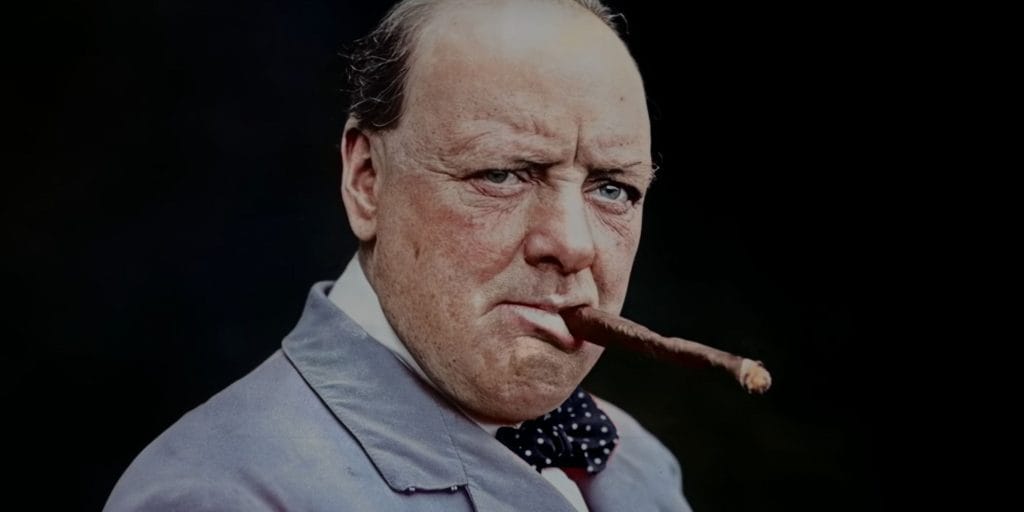
Winston Churchill famously delivered the following in his speech to the boys at Harrow School on October 29, 1941, while referring to the ongoing struggle of Great Britain and the Allied forces against Nazi Germany during World War II, and said:
Never give in, never give in, never, never, never give in, in nothing, great or small, large or weighty, never give in except to convictions of honour and good sense. Never yield to force; never yield to the apparently overwhelming might of the enemy.
The quote above I cling to when I check out yet another failed version of my Expert Advisor. Giving up is just too easy, and I am certain that I would be able to identify the first 369 reasons to justify me doing so, but that wouldn’t get me closer to where I want to be, would it?
Yielding to the might of the market
I will continue to remind myself that yielding to the apparently overwhelming might of the market, is not an option. I will never, never, never give in and accept defeat, I will continue to push forward until I succeed, as success is just around the corner, and I believe that both the Buy and Sell Zones (BASZ) Expert Advisor and the ASR Expert Advisor are both great
Thank you.